Benesse Corporation provides opportunities for children to learn about nature and the environment in a way that is tailored to their developmental stage, through its products, services, and events.
Examples of environmental education through teaching materials
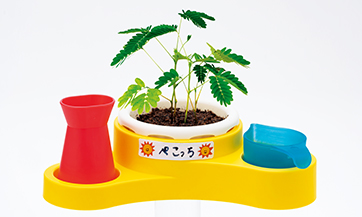
Preschoolers: Kodomo Challenge Jump June issue "Mimosa Care Set"
This kit allows you to start growing "Mimosa pudica" yourself, from sowing the seeds.
Through the experience of cultivating mimosa plants, children learn about the necessary conditions for growing plants, such as proper watering, and develop an attachment to and appreciation for what they have grown themselves.
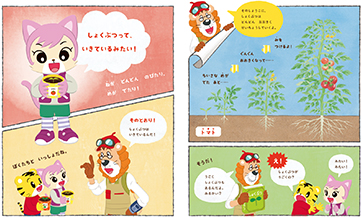
In addition to educational toys, they also offer videos to pique interest in cultivating mimosa plants and picture books to foster interest in other plants.
Preschoolers: Kodomo Challenge Step April issue "Observe! Pill Bugs"
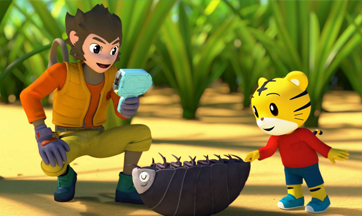
This is one of the "Living Creatures Observation Programs" featured in the April-September issues. It aims to foster curiosity and a spirit of inquiry by observing living creatures around us from three perspectives: "shape," "food," and "special skills."
The theme for the April issue is "pill bugs." The adventure story unfolding through videos and lessons will excite your child.
Preschoolers: Shimajiro 's environmental animation
This is a Shimajiro anime featuring four songs that young children can enjoy watching and singing along to, fostering a sense of care for the Earth.
Learning that many living things coexist happily together on Earth, and developing feelings of "cuteness" and "liking" towards the animals that appear, will lead to a desire to "cherish" them and the motivation to act accordingly in the future.
Furthermore, as an environmental education song, by including a few scenes depicting environmental issues in the video, it not only provides entertainment but also conveys the message that various environmental problems are occurring around the world.
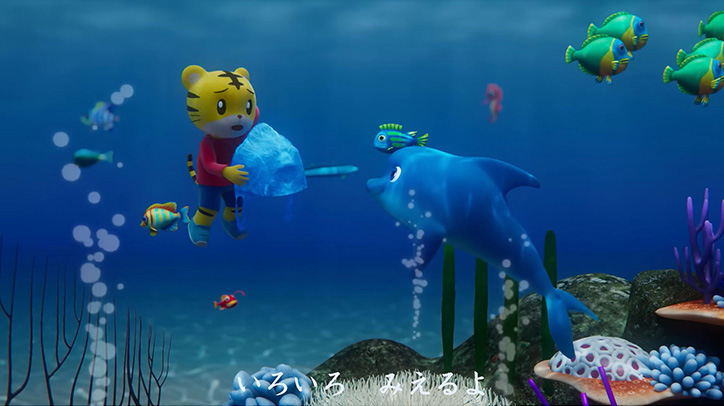
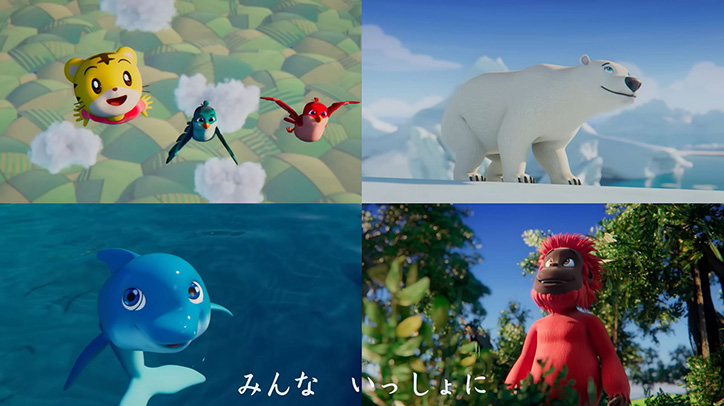
"A Big Blue House" ©
[Shimajiro Wow! "Technology Wow! Special" episode wins Best Preschool Award at the 29th Asian Television Awards]
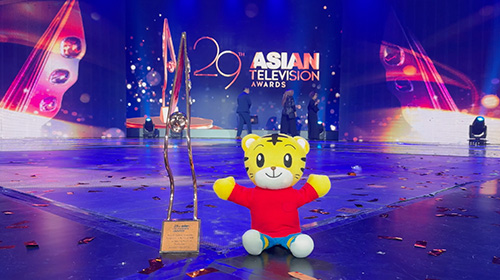
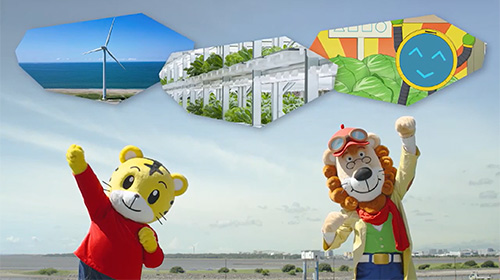
An episode of "Shimajiro no Wow!" themed "Technologies that Create the Future" won the Best Preschool Program award at the Asia Television Awards, Asia's largest international television awards. From over 1,000 entries from across Asia, the episode was judged by 60 experts and recognized as a particularly outstanding program, marking the second consecutive year and third time the show has received this award. The episode consisted of segments that taught about new technologies that will create the future, such as robotic hydroponics and clean energy. It aimed to convey the importance of building a sustainable society and to encourage conversations between parents and children after viewing, even on difficult themes such as technology and environmental issues, and to inspire children to think and act for themselves.
Toddler: Ma-mi-mu-me-mottainai! Shimajiro Wow!
The aim is to explain to young children in an easy-to-understand way what "wasteful" means and to raise their awareness of it.
This program introduces common "wasteful" situations in kindergarten life through easy-to-understand lyrics and dance set to the Japanese syllables "ma-mi-mu-me-mo," helping children become more aware of eliminating wasteful behavior while singing and dancing.
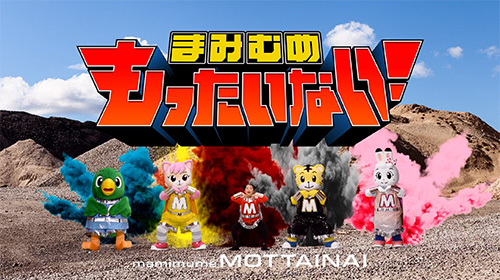
[“Mamimumemottainai!” selected as one of the "100 Best Environmental Education/ESD Practice Videos" by the Ministry of the Environment]
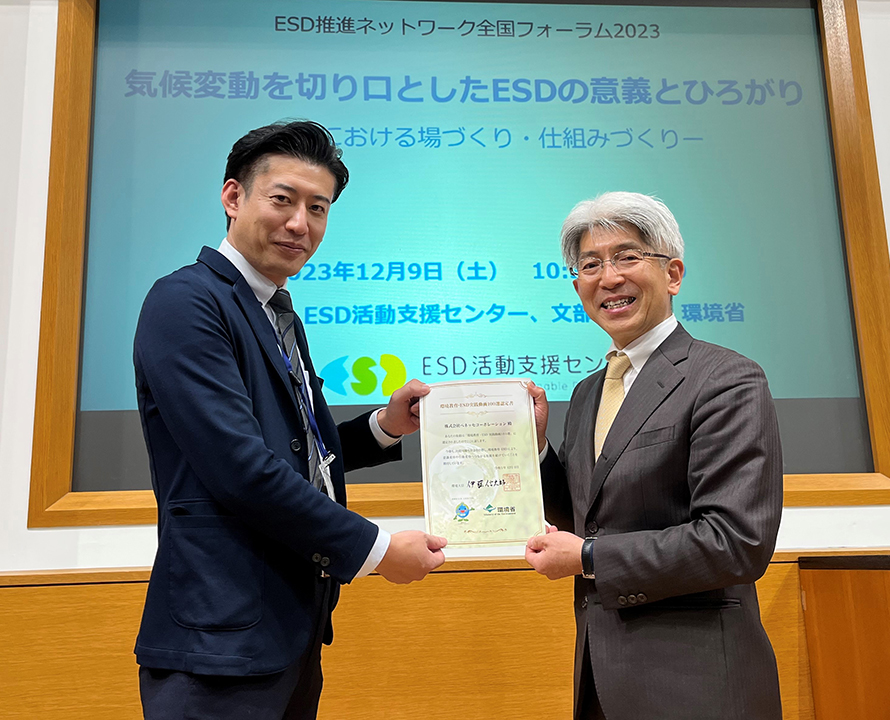
The environmental awareness video for young children, "Mamimume Mottainai!", has been selected as one of the "100 Practical Videos" in the social education category of the "100 Practical Videos for Environmental Education and ESD - Let's Start! Let's Expand! Learning Initiatives" program launched by the Ministry of the Environment in fiscal year 2023. The selection committee commented, "We felt a strong commitment to 'fun' so that young children can naturally engage with the topic through play. We think it would be good to see more videos like this as B to C (Business-to-Consumer) videos in the future."
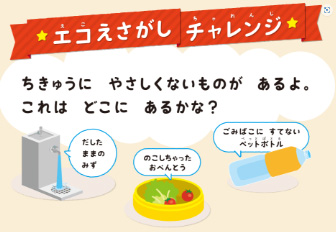
Toddlers: Let's take on an eco-challenge together as a family!
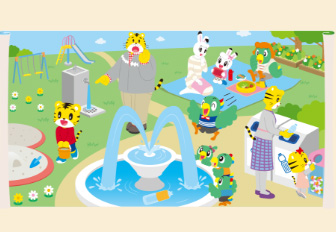
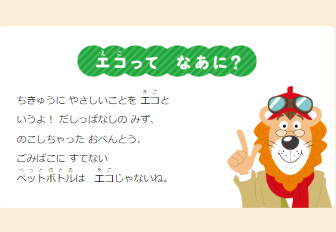
With the hope that parents and children will learn about and discuss "eco-friendly" issues together, we are providing information in a special environmental issue of the "Shimajiro Newspaper" and on our website. Although it is a difficult topic for young children, we are suggesting ways to encourage them to cherish the things they love and the things around them through games such as quizzes and picture searches.
Elementary school students: "Shinkenzemi" Thinking Skills Plus Course for 5th and 6th graders, opening feature: "Kouta's Interesting News File"
This page aims to cultivate critical thinking skills based on diverse perspectives and experiences by deepening intellectual curiosity through themes in various fields such as "environment," "economics," and "science."
In the field of environmental studies, students can learn about the balance between living things and nature, the causes and countermeasures for extinction, and, in the field of environmental studies, consider what can be done before recycling, which requires time and energy, thus increasing their interest in the environment.
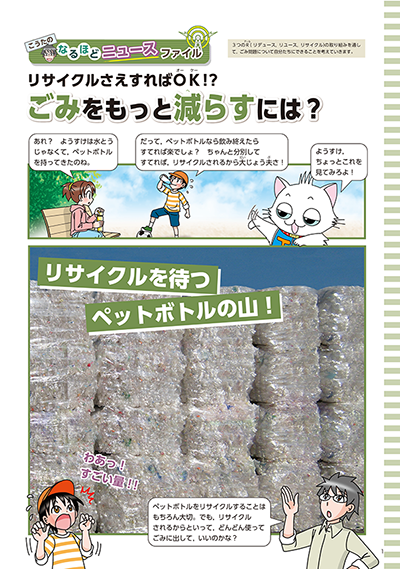
Is recycling enough?! How can we reduce waste even further?
©MD Co., Ltd.
Elementary school students: "Shinkenzemi" <Challenge Touch> Social Studies, Grades 4 & 5
"Shinkenzemi" <Challenge Touch> creates content for social studies that helps students understand elementary school lessons.
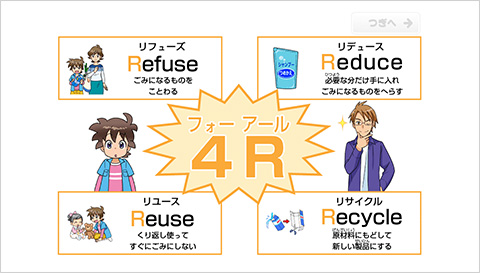
In the fourth grade, we introduce students to the importance of understanding waste management issues and implementing the 4Rs (Refuse, Reduce, Reuse, Recycle), and encourage them to take action.
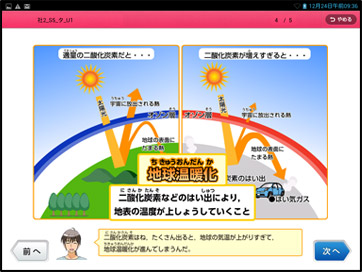
In the fifth grade, the environmental unit covers topics such as environmental issues in the world and illustrations of global warming.
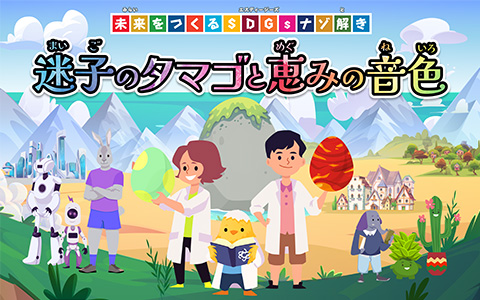
Elementary school student: "Solving the SDGs Mystery to Create the Future: Voices Across the Seas and the Secrets of the World"
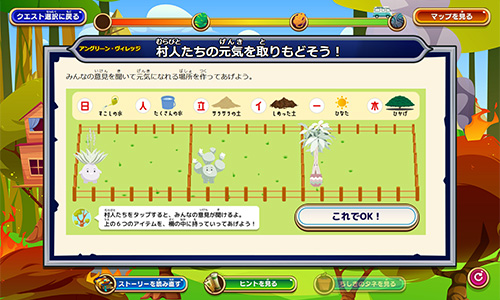
"SDGs Puzzle Solving for the Future" is a project that provides children with an opportunity to learn about the SDGs in a fun way and to look towards the future world. Through content that makes children want to "want to know more" and "want to try it," the project aims to cultivate their creativity in recognizing global issues such as environmental problems, and their ability to take proactive action toward solving them.
*This content is exclusive to members of "Shinkenzemi Elementary School Course".
Junior high school students: "Shinkenzemi" <Future Studies>
Shinkenzemi High School Course's "Future Studies" offers helpful topics ranging from worries about junior high school life to future dreams. It also covers SDGs as a hint to find your future through everyday things.
High school students: Research Navi
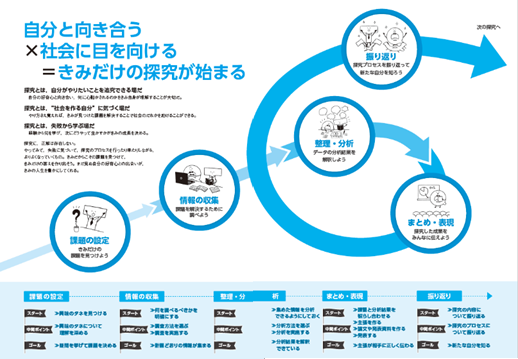
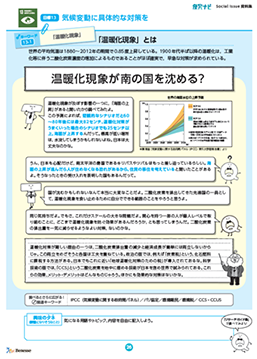
The "Future-Opening Inquiry Series: Inquiry Navigator," an inquiry-based learning material for high school teachers and students that supports problem identification and resolution during "integrated learning time," provides content that allows students to learn the "process of inquiry-based learning" and "necessary ways of thinking," and to practice inquiry-based thinking based on real social issues such as global warming, thereby deepening their understanding of global warming.
Collaboration with government agencies: STEAM Library
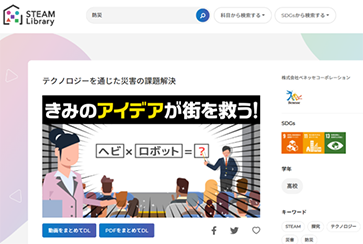
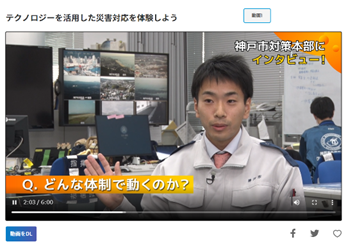
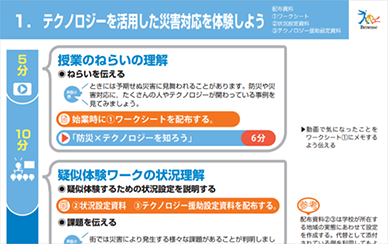
In March 2021, Benesse Corporation developed a "STEAM material for disaster prevention learning" for high school students as part of the Ministry of Economy, Trade and Industry's "Future Classroom" project's STEAM library. Based on disaster occurrences in Japan and around the world, and using hazard maps and statistical information of their own areas, high school students explore local disaster prevention and mitigation. This learning support material allows them to think about robots that can be used as solutions, as an example of how technology can be used for disaster prevention and mitigation, in collaboration with universities, companies, and local governments.
Environmental education through events and competitions
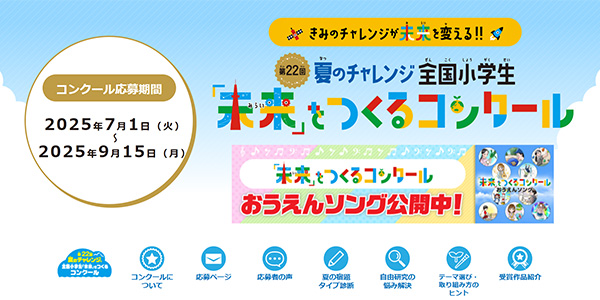
National Elementary School Students' "Creating the Future" Contest: Environmental Category - Supporting Environmental Activities
Every summer during the school holidays, we provide students with the opportunity to research local activities and environmental issues, compile their findings into a project, and submit it to the public.
Benesse STEAM Festa
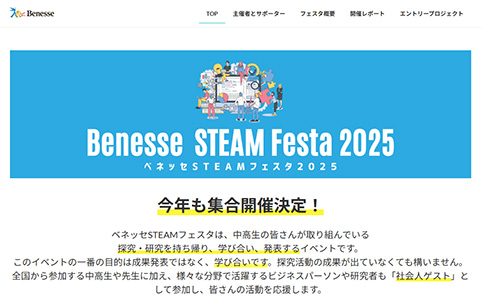
SDGs are a particularly popular theme at exchange events for inquiry-based learning among junior and senior high school students nationwide. Some students are not only conducting surveys and empirical research, but are also expanding their efforts to societal issues.
In 2024, the event was held on March 22nd at Showa Women's University Affiliated Showa Junior and Senior High School. Approximately 300 junior and senior high school students from 25 schools across the country gathered to present and learn from each other's research activities and projects, transcending the fields of academia, social innovation, and manufacturing.
National Research Contest
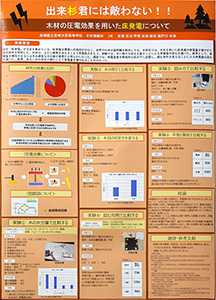
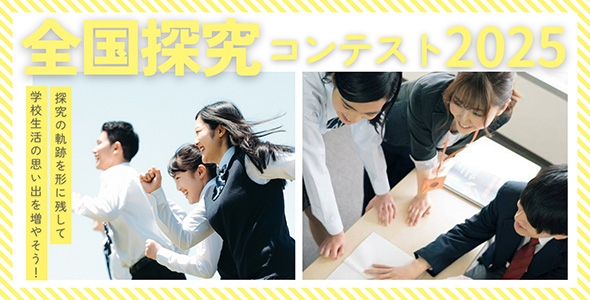
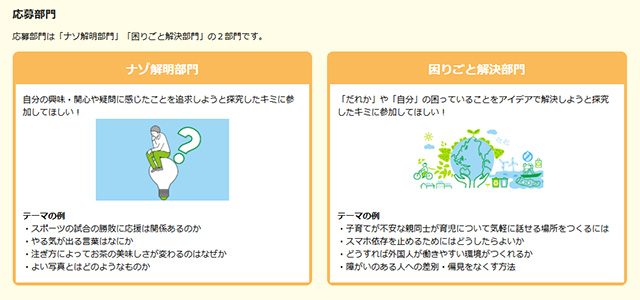
The "National Inquiry Contest" is a platform for junior and senior high school students from schools that have adopted the "Inquiry Navi" and "Inquiry Navi Basic" teaching materials to pursue their own interests and concerns. Through inquiry into environmental issues, social issues, and other topics, it serves as an important step in encouraging action toward a sustainable future.
Providing environmental education through local events
We collaborate with local governments, companies, and environmental organizations, and participate in various events, providing a wide range of opportunities to learn about the environment in an enjoyable way.
Contribution to environmental education in collaboration with local governments
● Participation in the creation of the Tama City Biodiversity Guidelines
To protect the rich natural environment, coexist with living creatures, and build a sustainable society by obtaining the blessings of nature, Benesse Corporation is participating in the creation of the Tama City Biodiversity Guidelines and cooperating in biodiversity education in Tama City.
Environmental education for employees
To deepen employees' understanding of environmental goals and initiatives, and to provide them with hints for their own activities, we conduct training for new employees, environmental training for each department, and departmental training. We also provide specialized training for new employees in charge of environmental work. In addition, we appoint persons on each floor to ensure thorough waste sorting and energy conservation, and we promote employee awareness by disseminating information on sorting status and other matters from each floor.